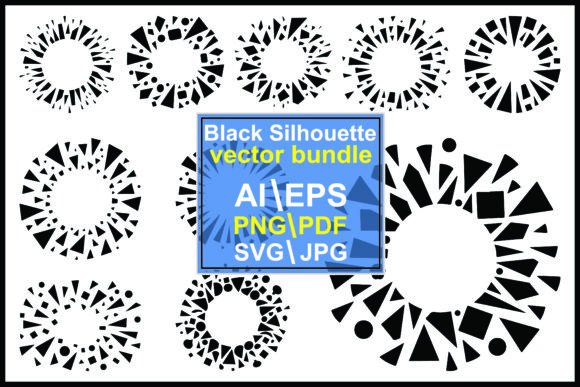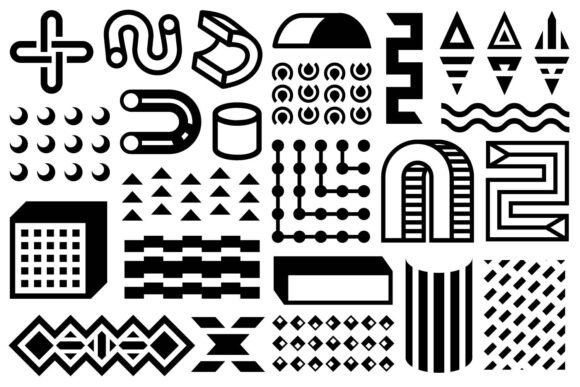
Black Geometric Abstract Circular Shapes
A Designer’s First Look: Clean, Confident, and Quietly Bold
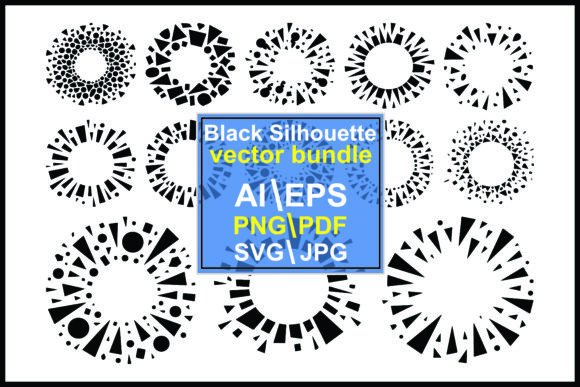
When I opened Black Geometric Abstract Circular Shapes, my first thought wasn’t “pretty” — it was “purposeful.” This isn’t a busy pattern or a fussy motif. It’s a collection of deliberate, balanced circular forms — some concentric, some overlapping, some subtly radial — all rendered in pure black against implied negative space. There’s no gradient, no texture, no accidental line weight. Just crisp geometry with breathing room. That simplicity is its strength — and also the first thing I consider before committing to an embroidery project.
Real-World Test: A Custom Embroidered Tote for a Local Boutique
Last week, I used Black Geometric Abstract Circular Shapes as the focal design on a natural linen tote bag for a small-town boutique. Their customers love minimalist, modern handmade goods — think ceramic mugs, soy candles, and uncluttered apparel. The tote needed to feel intentional, not trendy. I chose one mid-size circular composition from the collection (not the most complex, not the simplest) and placed it centered on the front panel. The result? Instant sophistication — but only because the design held up under real stitching conditions.
What Worked Brilliantly
- Stitch clarity on medium-weight fabric: Linen has enough body to support clean satin and fill stitches without distortion. The bold black outlines translated directly into sharp, confident satin stitch borders — no bleeding or fuzzing.
- Visual impact at arm’s length: Even from across the room, the shape reads clearly. That matters for retail displays, craft fairs, and Instagram thumbnails — especially when selling as a handmade product or small shop product.
- Neutral versatility: Because it’s black-on-negative-space, it works equally well on off-white, oat, charcoal, and even deep navy fabric — no recoloring required. That flexibility saves time for Etsy sellers listing multiple color variants.
- Brand consistency: Paired with a simple sans-serif logo tagline stitched nearby, the design reinforced the boutique’s calm, curated aesthetic — no competing visual noise.
Where It Needs Thoughtful Handling
Black Geometric Abstract Circular Shapes isn’t magic. Like any machine embroidery design, its success depends on context — not just creativity.
- Avoid tight curves and stretchy fabrics: Don’t place it on the crown of a baseball cap or the sleeve seam of a knit sweatshirt. The geometry relies on stable, flat surfaces. On curved or highly elastic substrates, circles can warp or pucker — especially near outer edges.
- Watch thread density on thin or delicate fabrics: While the collection leans toward open, airy layouts, some variations include tightly nested rings. On lightweight cotton poplin or baby muslin, that density can stiffen the fabric unnaturally. For baby embroidery or personalized gift items like onesies, I’d choose the most open variation and reduce fill stitch density manually.
- Dark fabric demands contrast testing: Yes, it’s a black design — but on charcoal or black fabric, you’ll need either white thread, metallic silver, or a tonal variegated thread to maintain legibility. Always test your thread colors on scrap fabric first.
- Small hoop sizes require curation: Not every element in the collection fits neatly in a 4x4 hoop. If you’re embroidering embroidered patches or cap fronts, preview each layout at actual size. Crop or simplify rather than shrink — distortion kills geometric integrity.
How It Elevates — and Sometimes Challenges — Your Finished Product
This collection doesn’t shout. It invites attention through precision. That makes it ideal for products where craftsmanship should speak louder than ornamentation: kitchen towels, pillow covers, aprons, and wedding gifts like monogrammed napkin sets. Customers notice the restraint — and associate it with care, intention, and quiet confidence.
But here’s what I’ve learned after using similar Illustrations in commercial work: if your craft business relies on fast turnaround or mass-produced appeal, Black Geometric Abstract Circular Shapes may slow you down — not because it’s hard to stitch, but because it asks for thoughtful placement, fabric matching, and stabilizer selection. It rewards patience. It doesn’t forgive rushed prep.
That said, it builds customer trust. When someone sees this on a custom sweatshirt embroidery or holiday embroidery piece, they don’t think “clip art.” They think “designed.” That perceived value lifts your pricing power and strengthens your brand consistency — especially if you use it across multiple product types like tote bag design, tea towels, and digital embroidery file previews.
Practical Notes Every Embroidery Designer Should Keep Handy
- Always run a test stitch on scrap fabric — same type, same stabilizer, same thread. Geometry shows every inconsistency.
- Check stitch density in your embroidery software. Some radial arrangements layer fills closely; trim excess density for soft fabrics.
- Confirm hoop size compatibility before digitizing or purchasing — especially if you plan to use it for commercial embroidery or custom apparel.
- Inspect small connecting lines and inner rings at 200% zoom. Tiny details vanish in fill stitch unless digitized with care.
- Review how it looks in black-and-white mockups — essential for printable mockup presentations and Etsy listings.
- Use cutaway stabilizer for structured items (totes, caps), tear-away for softer pieces (baby blankets, tea towels).
- If selling finished items or digital embroidery files, verify licensing terms. As a Graphics asset, usage rights affect your ability to resell embroidered goods or bundle the design.
Final Thought: Less Is Anchored, Not Empty
Black Geometric Abstract Circular Shapes won’t suit every project — and that’s its honesty. It’s not filler. It’s focus. Used well, it turns a plain handmade product into something quietly memorable: a nursery pillow with one centered ring, a holiday apron with subtle radial symmetry, a boutique sweatshirt where the design breathes beside the wearer’s shoulder.
For creative entrepreneurs, hobbyists, and makers who value clarity over clutter, this collection is a grounded, versatile tool — not a trend, but a foundation. Just remember: its power lives in the space around it, the fabric beneath it, and the care you bring to every stitch.