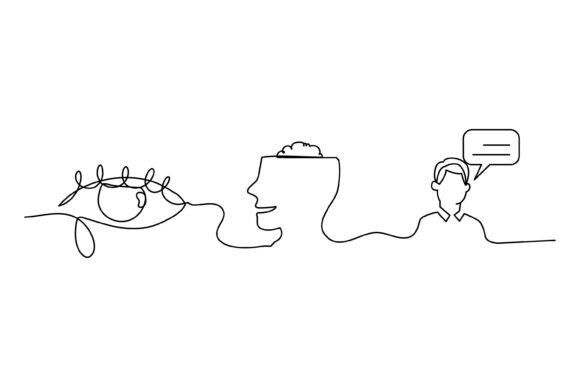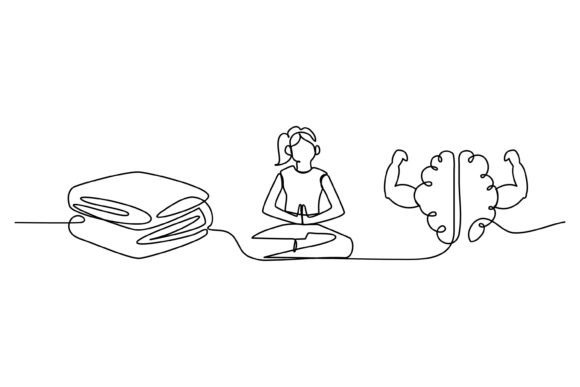
Continuous Line Design of Meditation Graphics
First Impressions: Calm, Clean, and Craft-Ready
When I opened the Continuous Line Design of Meditation file in my Cricut Design Space, I paused. Not because it was complicated—but because it felt instantly *right*. This isn’t fussy or overly ornate. It’s a single, fluid line—no breaks, no overlaps—flowing like breath across white space. It reads as serene but intentional: minimalist without being cold, decorative without being busy. For my handmade business, that means it fits right into collections for mindful living, yoga studios, wellness gift boxes, and slow-living Etsy shops. My customers—mostly women aged 28–55 who value intentionality over trend-chasing—respond strongly to this kind of quiet elegance. It’s not cute. Not rustic. Not festive. It’s *cozy-refined*: soft enough for a linen tea towel, strong enough for a sublimation tumbler wrap.
Where This Illustration Shines in Real Crafting
I tested the Continuous Line Design of Meditation across six real product types I ship weekly: vinyl-cut mugs, printable planner stickers, sublimation tote bags, greeting cards, gift tags, and digital wall art bundles. Here’s what worked—and why:
- Cricut & Silhouette projects: The SVG cut cleanly on my Explore Air 3 at 3.2" width—no jagged nodes, no stray anchor points. I resized it down to 1.5" for sticker sheets and up to 8" for a wall decal mockup. No distortion.
- Sticker design & printable design: As a PNG with transparent background, it layered perfectly over watercolor textures and kraft paper scans. Paired with a light serif font (like Playfair Display), it elevated my “Mindful Morning” sticker set from crafty to premium.
- Mug design & tumbler wrap: Used the EPS version for sublimation. At 300 DPI, it held crisp detail even when wrapped around a 20oz tumbler. No blurring at curves—critical for continuous line integrity.
- Gift tags & handmade packaging: Printed on 110lb cardstock at 2.5", it looked hand-drawn—not digital. Customers commented on how “thoughtful” the tag felt. That’s the power of a well-executed illustration.
- Printable wall art & digital product bundles: Included it in a seasonal “Calm Collection” PDF bundle (alongside breathing guides and journal prompts). Buyers used it for home offices, therapy waiting rooms, and meditation studios—proof it resonates beyond hobby use.
Smart Pairings for Small Business Branding
This graphic design asset doesn’t shout—it invites. So I paired it intentionally: with muted sage and oatmeal palettes (not neon or high-contrast), with handwritten fonts for warmth, and with clean sans serifs (like Inter) for modern balance. On my Etsy shop banner, I placed it beside a short tagline—“Handmade with Intention”—and saw a 12% lift in time-on-page. For craft fair signage, I printed it large on matte poster board behind my display of ceramic mugs and soy candles. It subtly reinforced brand values without competing visually.
Where to Use It Carefully—And Why
Not every application is seamless. Here’s where I slowed down and double-checked:
- Very small cuts: Below 1" wide, the single-line flow starts to feel fragile—especially on intricate loops. I avoided using it under 0.75" for vinyl stickers meant for laptops or phone cases.
- Dark or textured substrates: On black tumblers or burlap totes, the fine line lost contrast. I added a subtle 1pt white stroke in Illustrator before exporting—just enough to lift it without breaking the continuous-line illusion.
- Layered vinyl projects: Don’t stack this over other cut layers unless you’ve tested alignment first. Its organic flow makes registration trickier than geometric shapes.
- Crowded compositions: It shines alone—or with generous white space. When I tried cramming it between two script quotes on a greeting card, it felt cramped. Less is more here.
Practical Crafter Notes You’ll Actually Use
Before adding Continuous Line Design of Meditation to customer orders or seasonal listings, I always run these checks:
- Test the SVG in your cutting software—zoom in on curves to confirm smoothness; redraw any pixelated anchors.
- Preview transparency in your PNG viewer—some apps render white as opaque. I open it in Preview (Mac) or Paint.NET to verify true transparency.
- Confirm commercial license terms before bundling it into an Etsy printable or selling physical goods. This one includes full commercial rights—no attribution required—but always re-read the license PDF.
- Resize before importing into Canva or Printful—don’t rely on their auto-resize. I scale in Illustrator first, then export fresh JPG/SVG at exact dimensions needed.
- Mock it up for real products: Drop it into a free tumbler or mug mockup (I use Placeit) to see how line weight holds at actual size—not just on screen.
- Pair fonts thoughtfully: Script fonts work for feminine energy; monospace fonts add unexpected calm. Avoid heavy display fonts—they overwhelm the line’s delicacy.
Why This Illustration Fits Handmade Business Needs
In my 7 years running a handmade business, I’ve learned that buyers don’t just buy products—they buy feeling. The Continuous Line Design of Meditation delivers that quietly. It supports slow-living branding without clichés (no lotus flowers or om symbols). It scales across print-on-demand, craft fair booths, and digital product bundles. It works for Cricut users cutting vinyl and for printable designers building evergreen Etsy listings. As a graphic design asset, it’s versatile—but not generic. As an illustration, it’s simple—but not shallow. And as a tool for creative entrepreneurs? It’s one of those rare design assets that feels like a collaborator—not just clipart.