Hand Draw Line Art Botanical Set: A Stitcher's Honest Take
First Impressions and Visual Personality
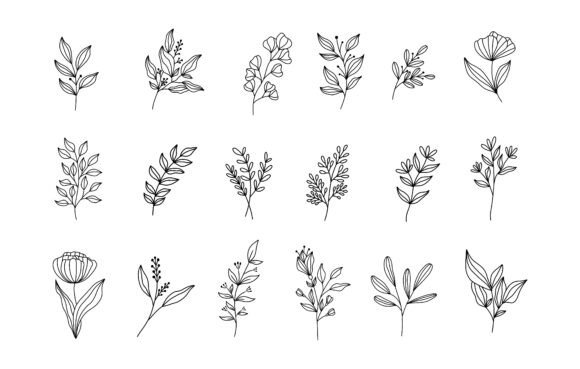
When I first opened the Hand Draw Line Art Botanical Set, what struck me immediately was the restraint. These are not overly ornate botanical illustrations trying to impress with complexity. Instead, the collection leans into a minimalistic, modern sensibility that feels deliberately airy. The hand-drawn quality gives each leaf a gentle, organic rhythm — slightly imperfect lines that will translate into stitching with a lot of natural charm. For an embroidery designer, that matters. Designs that look too stiff or geometrically perfect on screen often lose warmth once stitched onto fabric. This set already carries the kind of softness that embroidery naturally amplifies.
The mood is quiet, botanical, and slightly romantic without being fussy. I could see these leaves working beautifully for projects that need a touch of nature without shouting. The variety within the set means you can build a composition rather than relying on a single isolated motif. That flexibility is something I always look for when evaluating a Graphics resource meant for real production work. As an Illustrations collection, it sits in that sweet spot between decorative and understated, which opens up a surprising number of project possibilities.
A Real Project Scenario: Wedding Welcome Tote
Let me walk you through a real scenario I had in mind while reviewing the Hand Draw Line Art Botanical Set. I was preparing a custom embroidered tote bag for a client's wedding welcome gift — the kind of high-end handmade product that brides order for their bridal party. The brief called for something elegant, botanical, and personal without being overtly floral or traditional. Immediately, I thought of this set.
I selected three leaf sprigs from the collection and arranged them in a soft, trailing composition across the lower corner of a natural cotton tote. The lines were fine enough to feel delicate, but the shapes were distinct enough to hold their own after digitizing. I used a muted sage green thread on a cream canvas tote, and the result was exactly what the client wanted: modern, botanical, and personal. The stitch clarity held up beautifully because the leaf outlines were clean and the spacing between elements was generous. No muddiness, no lost details. That is the kind of result that builds customer trust and repeat orders.
Where This Botanical Set Truly Shines
After working with the Hand Draw Line Art Botanical Set across several test pieces, I can confidently say it performs best on projects that benefit from a light, airy botanical touch. Here are the products where I would reach for this set without hesitation:
- Tote bags and canvas shoppers — the open linework breathes beautifully on natural fibers.
- Sweatshirt embroidery — placed near the collar or cuff, a single leaf sprig adds a subtle branded detail.
- Pillow covers and linen home decor — the botanical theme feels at home in cozy, lived-in spaces.
- Tea towels and kitchen linens — a small leaf motif near the hemline reads as understated and artisanal.
- Wedding handkerchiefs and bridal accessories — the delicate linework suits sentimental personalized gifts remarkably well.
- Nursery decor and baby blankets — the soft, natural shapes work for gentle, nature-inspired baby items.
- Embroidered patches — isolated leaves from the set can become lovely standalone patches for jackets or bags.
In each of these applications, the design's minimalism becomes its greatest asset. There is enough negative space to let the fabric breathe, which prevents the stitched area from becoming stiff or heavy. For Etsy sellers and craft business owners, this means a finished product that feels high-end and intentional rather than mass-produced.
Fabrics and Products That Demand Extra Care
No design works everywhere, and a responsible review means being honest about limitations. The Hand Draw Line Art Botanical Set, with its fine linework and open botanical shapes, does require some thoughtful handling on certain materials. Here is where I would pause and test carefully before committing to a full production run:
- Stretchy fabrics like jersey or performance knits — the fine lines can distort if the fabric shifts during stitching. A heavy-duty stabilizer is non-negotiable here.
- Dark fabrics — the delicate linework may lose contrast if the thread color is not chosen with care. I always test a thread color swatch on a scrap of the actual fabric first.
- Small hoop sizes — if you try to fit too many leaves into a tiny hoop, the details will close up and the elegance disappears. Respect the scale.
- Textured fabrics like terry cloth or thick fleece — the fine botanical lines can sink into the pile and lose definition. A topper can help, but the crispness will still soften.
- Curved surfaces like caps and hats — the linear nature of the leaf designs can warp awkwardly on a strongly curved embroidery field. Placement and hooping become critical.
- Frequently washed items — while the design can hold up, I recommend testing wash durability if the item will face heavy use, such as a daily-use apron or a child's garment.
These are not dealbreakers. They are simply the realities of working with fine line machine embroidery design files. Knowing where a design struggles is just as valuable as knowing where it excels.
Stitch Quality and Design Practicality
When I digitize from an illustration like those in the Hand Draw Line Art Botanical Set, the conversation always turns to stitch type. These leaf drawings are naturally suited to a clean running stitch or a light satin stitch for stems and central veins. The open shapes mean you can avoid dense fill stitch areas that make the fabric stiff. For an applique design approach, you could use the leaf outlines as placement guides, though the hand-drawn quality suggests a more delicate, stitched interpretation rather than a heavy fabric overlay.
One thing I appreciate about this set is that the leaf shapes are distinct enough to remain recognizable even at reduced sizes. Too many botanical design assets become blobs when scaled down for a pocket or a cuff. These do not. The spacing between leaves, the gentle curves, and the deliberate simplicity all contribute to strong stitching clarity across a range of dimensions. For a small shop product or a craft fair item, that reliability is essential. You cannot afford to waste materials on a design that stitches out poorly.
Commercial Use and Small Shop Considerations
From a business perspective, the Hand Draw Line Art Botanical Set offers real versatility. If you sell custom apparel, personalized gifts, or boutique branding items, having a botanical collection that feels modern rather than traditional gives you a distinct edge. The market is saturated with heavy floral embroidery. A minimal, hand-drawn botanical look sets your finished product apart. I can see this collection working across multiple product categories in a single shop, which improves brand consistency and visual cohesion in your listings.
For Etsy sellers and digital product sellers, these illustrations can also serve as printable mockups or preview assets. The clean linework photographs well and helps customers visualize the final embroidered piece. That said, always confirm the licensing terms before using the files in a commercial embroidery context or selling finished items. The product description highlights wedding invitations as a key use case, but for embroidery, you need to verify that the files can be digitized and sold as part of a physical product. This is not a concern unique to this set — it is standard due diligence for any digital embroidery file or design asset you incorporate into your work.
Designer Notes Before You Stitch
Here is my practical checklist for anyone preparing to use the Hand Draw Line Art Botanical Set in a real embroidery project. These are the steps I follow, and they have saved me from countless ruined blanks and unhappy clients:
- Test the design on scrap fabric first. Always. Fine botanical lines can behave differently on different weaves, and a test stitch reveals issues before they cost you money.
- Check thread color contrast against your fabric. A sage green that looks perfect on natural linen may disappear on olive canvas or look garish on bright white. Test multiple thread swatches.
- Review stitch density after digitizing. The hand-drawn quality of the original illustrations should be preserved, not buried under overly dense stitching.
- Confirm your hoop size can accommodate the design at the scale you intend to use. Do not assume the file will fit your machine's standard hoop without checking.
- Inspect small details at actual size. What looks crisp on a screen may become a thread blob at two inches wide. Test at the exact dimensions of your final product.
- Test in a black and white mockup. Converting the design to grayscale helps you evaluate shape and negative space without color bias. If it reads well in black and white, it will stitch well.
- Compare how the design looks on light versus dark fabric backgrounds. The visual weight of the botanical lines shifts dramatically with contrast, and you want to see both versions before committing.
- Use proper stabilizer for your fabric type. A cut-away stabilizer for stretch, a tear-away for stable wovens, and always a topper for textured or fluffy surfaces.
- Check whether the design allows for both personal and commercial embroidery projects. The product description mentions wedding invitations, but you need to confirm the license covers sewn products and physical goods.
- Keep a stitched sample in your portfolio. Buyers respond to seeing the actual embroidered result, not just the digital preview. A well-stitched botanical leaf on a tote bag is a powerful selling tool.
Who This Set Is Really For
If you are an embroidery designer who values subtlety, a craft business owner building a nature-inspired brand, or a handmade shop maker looking for botanical design assets that feel current and uncluttered, the Hand Draw Line Art Botanical Set deserves a close look. It is not the right choice for bold, dense, or highly decorative embroidery styles. But for modern, airy, and elegantly simple projects, it is genuinely useful. The hand-drawn personality carries through the digitizing process well, and the variety within the set means you can create multiple distinct products without repeating the same composition.
I have used it on a wedding gift tote, a set of linen napkins for a small boutique order, and a holiday embroidery pillow cover. Each time, the result felt intentional, personal, and professionally finished. That is the kind of design resource that earns a permanent place in my embroidery library — not because it is flashy, but because it works reliably and makes my finished products look better.