Tulip Flower Frame Silhouette Art: Graphics & Illustrations
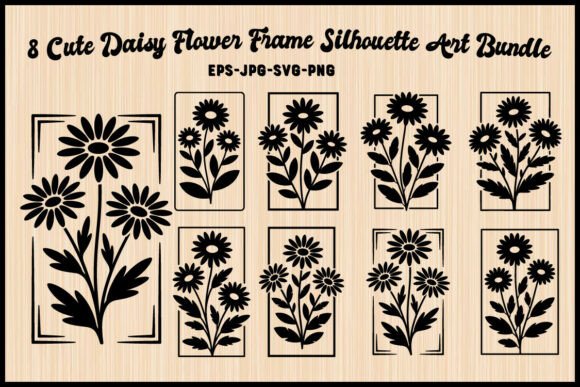
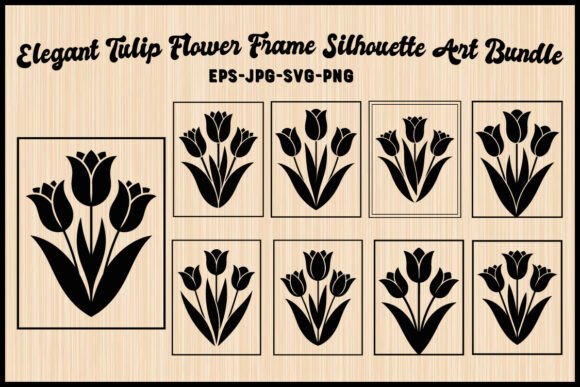
As a graphic designer who’s built brand identities for over a dozen handmade businesses—from artisanal candle makers to seasonal wedding stationery studios—I recently evaluated Tulip Flower Frame Silhouette Art for a spring-themed rebrand project. The client, a small-batch botanical tea company launching a limited “Tulip Bloom” collection, needed elegant yet versatile visual elements that felt fresh, intentional, and commercially flexible. My first impression? This is not generic clipart. It’s a cohesive design bundle with quiet confidence—9 distinct tulip silhouettes, each thoughtfully nested within delicate frames or wreaths. The mood is soft but precise: romantic without being saccharine, minimalist without feeling sterile.
What makes Tulip Flower Frame Silhouette Art stand out in real-world use is its balance of symbolism and scalability. Tulips carry cultural weight—conveying renewal, care, and quiet devotion—and these illustrations translate that meaning into clean, modern design language. They’re ideal for small business branding where emotional resonance matters as much as visual clarity. I tested them across multiple touchpoints: product labels, Instagram carousel posts, Canva templates for email headers, and even as subtle watermark motifs on printable recipe cards. In every case, they elevated the perceived craftsmanship of the work—adding warmth and intentionality without overwhelming the core message.
Where It Shines: Real Client Applications
This digital product performs exceptionally well in contexts that benefit from gentle visual rhythm and thematic cohesion:
- Packaging design — Used as a border motif on tea box lids or as a corner accent on kraft paper bags, it adds tactile elegance without competing with typography.
- Social media graphics — Works beautifully in Pinterest pins and Instagram story highlights when paired with muted palettes and ample whitespace.
- Printable design — Printed at 300 DPI on textured cotton paper, the SVG and high-res PNG files hold crisp detail—ideal for wall art bundles sold on Etsy.
- Cricut project and sublimation design — Clean vector paths cut flawlessly; no jagged edges or stray anchor points.
- Brand identity extensions — Not for primary logos (too decorative), but perfect as secondary marks, pattern elements, or iconography within style guides.
Where to Use With Intention
While versatile, Tulip Flower Frame Silhouette Art isn’t universally adaptable. Its ornamental nature means it requires thoughtful placement:
- Avoid using it at under 1.5 cm tall in print—it loses definition and becomes visually noisy.
- Steer clear in professional corporate materials (e.g., investor decks, B2B reports) where neutrality and data-first hierarchy are expected.
- Don’t layer it over complex or low-contrast backgrounds—its strength lies in breathing room, not visual density.
- Resist pairing it with ultra-minimalist sans-serif systems (like Neue Haas Grotesk) unless you’re intentionally creating tension; it harmonizes better with serif fonts (e.g., Playfair Display), soft scripts, or friendly display typefaces.
Design Judgment: Readability, Trust & Emotional Impact
In client-facing work, every asset contributes to visual hierarchy and audience perception. These tulip frames subtly reinforce trust—not through authority, but through care. When placed beside hand-lettered copy or natural product photography, they signal attention to detail and aesthetic empathy. That’s invaluable for handmade business clients trying to differentiate in saturated markets like print-on-demand or digital marketplaces.
However, I’ve seen designers unintentionally dilute brand consistency by scattering these frames across too many touchpoints without establishing rules. My recommendation: treat them as supporting brand elements, not decorative filler. Assign one frame per campaign phase or product line, then lock in size, color treatment, and placement logic in your brand guidelines. That transforms a simple illustration into a strategic creative design tool.
Practical Designer Notes Before Deployment
Before clearing Tulip Flower Frame Silhouette Art for a client project, I always run this checklist:
- Test in black and white—does the silhouette retain shape integrity on dark backgrounds?
- Preview at actual usage sizes: 48px for web icons, 3” wide for sticker mockups, full-bleed for posters.
- Place on realistic product mockups—especially for mugs, tote bags, and greeting cards—to assess proportion and legibility.
- Verify file formats: Confirm SVG editability (check for grouped paths vs. compound shapes) and inspect PNG transparency (no halo artifacts).
- Compare against typography: Does it complement your chosen font family’s x-height, stroke contrast, and rhythm?
- Confirm commercial license: Ensure redistribution rights cover your client’s intended use—especially for Etsy product listings or print-on-demand platforms.
For marketers and content creators building seasonal campaigns—or crafters designing Cricut projects for local farmers’ markets—this bundle delivers more than decoration. It’s a ready-made piece of visual storytelling. When used with discipline, Tulip Flower Frame Silhouette Art helps turn functional marketing visuals into emotionally resonant commercial design. And in today’s crowded digital landscape, that quiet distinction is exactly what makes a brand feel both memorable and human.