Natural Ornament: A Designer’s Practical Embroidery Review
First Look at the Art Nouveau Floral Flow
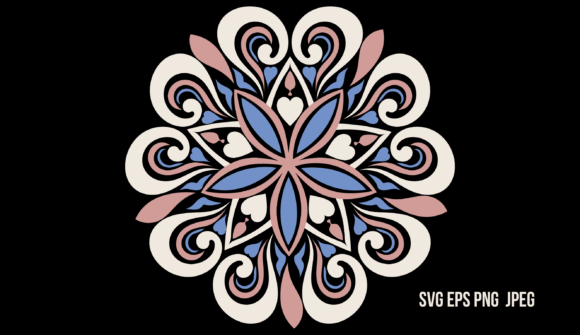
When I open a new embroidery file, the first thing I notice is whether the design has a clear personality. Natural Ornament hits that mark immediately. The pattern draws from lilies and irises—flowers that already carry a graceful, slightly architectural feel—and wraps them in the unmistakable swirl of Art Nouveau. The lines are not stiff; they curve and taper like they were pulled by a gentle current. There is a sense of restrained movement, something that feels organic without being messy. The designers captured the harmony between botanical accuracy and decorative rhythm, and that is no small feat.
Because this is a graphics file in the Illustrations category, the digital version already shows off a strong silhouette. The layout feels balanced, with no single heavy element that would throw off a centered placement on a garment. The visual weight is evenly distributed, which matters a lot when you start thinking about embroidery hooping and fabric tension. The artwork is clearly designed to be shown, not hidden. I can already imagine it on a linen pillow cover or a soft cotton sweatshirt, where the stitches would give it dimension and the flowing shapes would catch light from different angles.
Where This Design Truly Belongs
Not every embroidery design fits every product, and a big part of a professional review is matching the artwork to the right surfaces. Natural Ornament feels like it was made for items that can handle a medium-to-large motif without competing with other elements. I kept coming back to the idea of a custom tote bag. Picture a natural canvas tote, maybe 14 by 16 inches, with this design stitched in a soft sage green or a muted terracotta thread. The floral lines would flow along the bag’s front panel, and the negative space inside the swirls would let the fabric texture breathe. For a small handmade shop, that kind of product has high giftability and looks expensive without being complicated.
Apparel is another strong fit. A lightweight sweatshirt or a relaxed-fit tee gives the design enough room to stretch out. I’d avoid anything too tight or highly structured, because the fluid nature of the pattern needs a little freedom. On a baby blanket or a nursery pillow, the design brings a quiet, storybook quality—especially if you choose thread colors that feel soft, like dusty rose or cornflower blue. For Etsy sellers and craft fair vendors, Natural Ornament can elevate a simple product into something that feels like a boutique find. It works especially well for personalized gifts when you add a monogram or a small name below the central bloom, but only if you place it carefully so the Art Nouveau flow isn’t broken.
I also see this design doing well on kitchen towels and aprons. The elongated vertical swoop of the irises and lilies fits nicely along the hem of a towel or the bib of an apron. However, because the design is detailed, you’ll want to pick a fabric that isn’t too nubby, or the fine lines will lose their crispness.
Real-Life Scenario: Testing It on a Client’s Tote Bag
To give a concrete example, I recently prepared a small batch of embroidered tote bags for a local boutique’s spring collection. The client wanted something botanical but not overly sweet, something that felt artistic and a little vintage. I pulled up Natural Ornament and ran a test stitch on a scrap of cotton canvas. The first thing I noticed was the way the satin stitch borders caught the light. The flowing lines, especially the long iris petals, stitched out smoothly with minimal thread breaks. I used a 40-weight polyester thread in a deep olive for the main body, and a slightly lighter green for the inner fill to create a subtle tonal shift. The result was elegant but not loud, which matched the brand’s aesthetic perfectly.
During the test, I also checked the small details. The design includes tiny curves where the leaves fold over, and those areas needed a close look. On a 5x7 hoop, everything held together well. But if I had tried to shrink it below 4 inches wide, I suspect those delicate bends would start to blur. That’s not a flaw—it’s just the nature of Art Nouveau linework. The lesson is to respect the scale. Natural Ornament wants to be seen, so give it the space it deserves.
After the test, I stitched it onto the final tote bags. The boutique owner loved the way the design looked like a custom illustration rather than a mass-produced embroidery. Customers responded to the handcrafted feel, and the bags sold out at the first market. That kind of real-world feedback tells me the design has legs for commercial use, as long as you treat it with care.
What to Watch Out For in Production
Every embroidery design has its quirks, and a honest review has to address the tricky spots. Natural Ornament is not a set-it-and-forget-it file. The flowing lines that make it beautiful also mean you need to be mindful of a few things.
- Fabric choice: Thin, stretchy fabrics like jersey or lightweight rayon can pucker under the dense satin stitching. Always use a good cutaway stabilizer and consider a topper if the fabric has a nap or a loose weave. I tested it on a soft cotton interlock onesie, and with a medium-weight fusible stabilizer, it held up well after washing.
- Dark fabric: The design’s impact relies on the contrast between the thread and the background. On a dark navy or black fabric, the fine lines can disappear if you choose a thread color that’s too close in tone. I recommend doing a test stitch on a dark scrap with a few thread options before committing. A warm cream or a pale gold often makes the Art Nouveau shapes pop without losing the organic feel.
- Small hoops: If you need to use a 4x4 hoop, this design might not be the best choice unless you are okay with losing some detail. The swirls and petal tips can become dense and muddy when scaled down too much. I’d stick to a 5x7 or larger hoop for the clearest results.
- Curved surfaces: Placing this on a cap or a hat brim is possible, but the long vertical orientation of the irises might fight the curve of the cap. You’d need to rotate the design or accept that the bottom petals may not sit perfectly flat. For caps, I’d test the placement on a practice cap first.
- Dense stitch areas: The central flower cluster can get a little thick if the file uses a heavy fill stitch. Check the stitch density in your software before running it. If it looks too dense, you can adjust it slightly, but be careful not to lose the smooth shading.
Another point: because the design is listed under Graphics and Illustrations, you might be receiving a digitized file that’s ready to stitch, but you must confirm the format and licensing. Always check whether the file is compatible with your machine and whether you are allowed to sell finished items made with it. Most craft business owners need a commercial license to sell embroidered products on Etsy or at markets. Don’t assume—always verify the terms before you start production.
Thread, Color, and the Art of Gentle Contrast
One of the joys of Natural Ornament is how it responds to different thread palettes. The design’s open, flowing structure means you can use bold, saturated colors for a modern graphic look, or stay with muted, dusty tones for a vintage botanical feel. I tested a version with a single color—a soft rust—and it read beautifully as a line-art style. Then I tried a two-color version with a deep plum for the outlines and a pale lavender for the inner petals, and the result was almost painterly.
When you’re choosing colors, think about the end use. A baby item might call for butter yellow and sage, while a kitchen towel could handle a brighter coral and teal. The key is to maintain enough contrast between the thread and the fabric so the design’s graceful lines don’t get lost. I also recommend looking at the design in a black-and-white mockup. That quick check can reveal whether the stitch density is balanced and whether the shapes hold together without color to guide the eye.
How This Design Lifts Your Product Line
For handmade sellers and small business owners, a design like Natural Ornament adds a layer of sophistication that generic floral patterns often lack. The Art Nouveau influence gives it a timeless quality, so it doesn’t feel trendy in a way that will date quickly. Customers buying a personalized gift—a monogrammed pillow, a custom tote, a embroidered apron—are drawn to things that feel intentional and well-crafted. This design delivers that.
I’ve seen similar motifs used very successfully in boutique branding. A small shop that sells handcrafted home goods can use this design on a signature product, and the visual consistency helps build brand recognition. The design’s flowing lines and natural theme also photograph well, which is a huge plus for online listings. A well-lit photo of the embroidery on a neutral linen background can make a listing stand out in a crowded Etsy search.
From a professional standpoint, the design’s stitch quality—assuming the digitizing is solid—will reflect on your reputation. If the stitches are clean and the lines are crisp, your customers will see a product that justifies a higher price point. That’s the kind of trust you build with each finished piece, and Natural Ornament gives you the visual tools to do that.
Before You Stitch: A Designer’s Practical Checklist
I always run through a short mental list before I commit a design to a client project or a batch of products. Here’s what I’d do with Natural Ornament:
- Test on scrap fabric that matches the final product’s weight and texture. Don’t skip this step—it’s the only way to see how the stitches behave.
- Check thread color contrast in natural light, not just on screen. A thread that looks perfect on a digital mockup might blend too much on real fabric.
- Review stitch density in your embroidery software. If anything looks overly dense, make a note and adjust if you have the editing capability.
- Confirm hoop size and make sure the design fits without pushing the boundaries of your hoop’s stitching field.
- Inspect small details like the tips of the iris petals and the inner curves. A single stray stitch can sometimes be fixed with a tiny trim, but only if you catch it before the final run.
- Test on dark and light fabric with your chosen thread colors to see which background gives the best result.
- Use proper stabilizer—I prefer a medium cutaway for most woven fabrics and a fusible mesh for knits. A topper can save small lettering or fine lines if the fabric has a pile.
- Confirm licensing for commercial use. If you plan to sell finished items, make sure the design’s license lets you do that. This is critical for Etsy sellers, craft fair vendors, and anyone putting products in a boutique.
Natural Ornament is a design that rewards careful preparation. It’s not a file you want to rush into production. But when you take the time to dial in the settings and the fabric, the result is a stitched piece that looks like a custom illustration—something your customers will remember, and something that reflects the care you put into your work. Whether you’re making a keepsake baby gift, a boutique tote, or a holiday kitchen towel, this design has the quiet presence to make any product feel special.