Watercolor Mixed Flower Collection
A Designer’s First Impression: Soft, Lived-In, and Full of Quiet Confidence
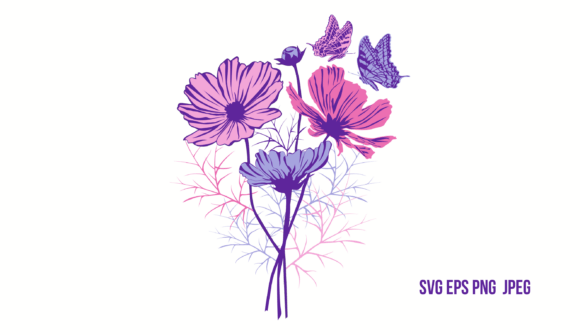
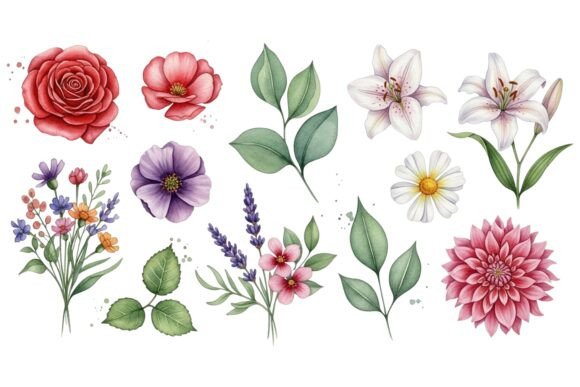
Opening the Watercolor Mixed Flower Collection feels like flipping through a well-loved botanical sketchbook—no rigid symmetry, no over-polished vectors. These are hand-drawn florals with breathing room: a vibrant rose that leans slightly left, an anemone with soft-edged petals, wildflowers scattered like they just landed in a breeze. Lavender stems curve gently, chamomile blooms are tiny but distinct, and the lily holds its elegance without stiffness. This isn’t clipart—it’s illustration with intention. As an embroidery designer who’s stitched hundreds of floral motifs, I immediately sensed its potential for projects where warmth and authenticity matter more than perfection: baby onesies, linen tea towels, boutique aprons, or personalized gift totes.
Where It Shines: Real Projects, Real Customers
I recently tested a few motifs from the Watercolor Mixed Flower Collection on a natural cotton tote bag—intended for a local herbalist’s shop launch. The result? Instant recognition and tactile charm. Customers paused mid-browse to trace the lavender stem with their fingers. That’s the power of this collection: it reads as handmade *before* it’s even stitched. On sweatshirts, the softer edges translate beautifully into gentle satin stitch gradients. On pillow covers, the varied scale (from bold lily to delicate chamomile) gives visual rhythm without crowding. For baby embroidery, the low-contrast watercolor washes avoid harsh lines—ideal for sensitive skin and minimalist nursery decor. And yes, it works for holiday embroidery too: pair the lavender and rose with subtle gold thread for a quiet, elevated Christmas gift—not flashy, but deeply memorable.
Why Etsy Sellers and Small Shop Owners Should Pay Attention
This collection bridges digital convenience and artisanal appeal. As a digital embroidery file, it’s ready to load—but unlike many “trendy” graphics, it doesn’t look mass-produced once stitched. That builds customer trust. When your Etsy listing shows a mockup of a linen apron with the Watercolor Mixed Flower Collection embroidered near the pocket, buyers don’t see a generic design; they see *your* brand’s quiet confidence. It supports cohesive branding across product types—same motif on a patch, a tea towel, and a greeting card—and scales naturally between print and stitch. For craft fair sellers, it’s a reliable anchor: versatile enough for kids’ caps (use the wildflower cluster), bridal shower gifts (anemone + lily combo), or kitchen bundles (lavender + chamomile on oven mitts).
Where to Proceed Thoughtfully
Watercolor aesthetics come with real-world embroidery considerations. Because these illustrations rely on soft transitions and layered washes, fine details—like the center pistils in the chamomile or the veining in lily leaves—can blur if stitch density is too low or stabilizer is insufficient. On thin fabric (think rayon challis or lightweight voile), extra tear-away stabilizer is non-negotiable. On dark fabric, test thread colors carefully: a pale lavender thread may vanish unless you use a slightly richer tone or add a white underlay. Curved surfaces—like structured caps—require careful placement: avoid placing the full rose motif directly over the crown seam, where distortion is most likely. And while the collection includes rich, stately elements, resist cramming too many flowers into a small hoop size (under 4”). Let them breathe—or edit down to one focal bloom plus a trailing leaf.
Design Integrity Meets Practical Execution
What makes the Watercolor Mixed Flower Collection stand out among Illustrations and Graphics is how well its artistic voice survives translation to thread. Many floral designs lose soul in digitization—edges sharpen unnaturally, gradients turn muddy, or fill stitches overwhelm delicacy. Not here. Even in basic fill stitch, the shapes retain their organic flow. Running stitch outlines work beautifully for minimalist patches. Satin stitch petal edges catch light softly, not slickly. That directly lifts the perceived value of your finished product. A customer paying $48 for an embroidered pillow cover doesn’t just buy fabric—they buy the feeling of being gifted something tender and considered. This collection delivers that, consistently.
Five Must-Do Steps Before You Stitch
- Test on scrap fabric first—especially if using textured weaves (burlap, heavy linen) or stretchy knits.
- Check thread color contrast on both light and dark backgrounds using printable mockups before finalizing your palette.
- Review stitch density in your embroidery software: reduce density slightly for lightweight fabrics, increase for dense fills on towels or denim.
- Confirm hoop size compatibility—some motifs span larger areas; verify your machine’s maximum embroidery area matches your intended layout.
- Inspect small details at actual stitch size: zoom in on the camomile centers or anemone stamens—if they’re smaller than 2mm, consider simplifying or omitting for baby items or high-wash products.
Final Thought: It’s Not Just a Design—It’s a Tone Setter
In a market flooded with sharp, saturated, algorithm-friendly graphics, the Watercolor Mixed Flower Collection offers something rarer: emotional resonance. It signals care, patience, and attention to texture—not just in the thread, but in the idea behind it. Whether you’re stitching custom apparel for a wedding client, building a cohesive line of embroidered kitchen goods, or sourcing design assets for digital product previews, this collection earns its place by performing quietly but powerfully. It doesn’t shout. It invites. And in handmade product circles, that kind of invitation is worth more than any trend.