Continuous Line Design of Philosophical
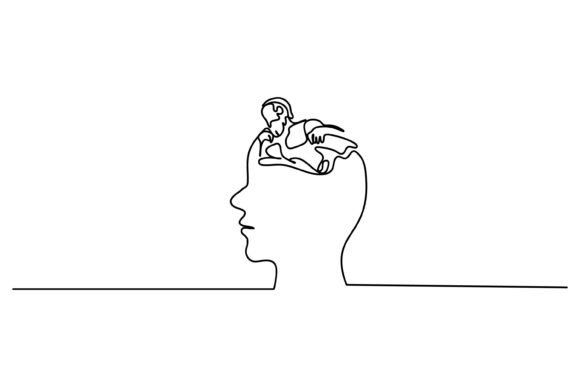
As a designer who’s stitched over 300 client projects—from boutique baby onesies to Etsy embroidery kits—I opened Continuous Line Design of Philosophical expecting quiet confidence. What I found was exactly that: a single, unbroken line tracing the shape of a contemplative human profile, subtly echoing ancient motifs and modern minimalism in equal measure. No shading. No fills. Just one fluid stroke on white—clean, intentional, and deeply calm. It doesn’t shout. It invites.
First Impressions That Hold Up Under Thread
This isn’t a bold statement piece—it’s a thoughtful accent. The line weight stays consistent across the entire illustration, which is rare in hand-drawn-style vector graphics. That consistency translates directly to embroidery: no sudden thinning or thickening when converted to a machine embroidery design. I immediately pictured it on a linen tea towel for a mindfulness-themed kitchen shop, or stitched in soft grey thread onto an organic cotton tote for a local bookstore’s staff gift set.
The composition breathes. There’s generous negative space around the figure—not empty, but purposeful. That gives your hoop room to move, your stabilizer room to grip, and your fabric room to relax without puckering. For small business owners stitching custom orders, that breathing room means fewer re-hooping moments and cleaner finished product photos for your Etsy listings or Instagram feed.
Where It Shines (and Where It Asks for Care)
Continuous Line Design of Philosophical excels on structured, medium-weight fabrics: canvas totes, cotton sweatshirts, linen pillow covers, and structured aprons. On a black crewneck sweatshirt? Stitched in matte charcoal thread with a light tear-away stabilizer, it reads as serene and sophisticated—not trendy, but timeless. On a baby onesie? Use a lightweight cutaway and a fine needle; the simplicity avoids bulk while still reading clearly at 3” wide.
It also works beautifully as an embroidered patch—especially when backed with iron-on adhesive for craft fair vendors who sell ready-to-apply designs. Because it’s a single continuous path, stitch density stays low and even. That means faster run times, less thread breakage, and gentler wear on your machine during high-volume production runs.
But here’s where attention matters: avoid using it on highly textured fabrics like bouclé or heavy terry cloth without testing first. The line’s elegance depends on clarity—and texture can blur its flow. Likewise, curved surfaces like baseball caps demand careful digitizing: the original SVG or EPS file will need manual adjustment to maintain proportion across the dome. Don’t assume auto-digitizing software will preserve its rhythm.
And skip dark fabric unless you’re prepared to test contrast thoroughly. A white JPG preview looks crisp—but on navy twill, even light grey thread may disappear. Always mock up in black and white first. Better yet: stitch a 2” version on scrap fabric in your intended thread color *before* hooping your final piece.
Real Project Test: A Boutique Nursery Pillow Cover
Last month, I used Continuous Line Design of Philosophical for a custom order—a 100% cotton pillow cover for a newborn’s nursery, meant to hang beside a meditation corner. I stitched it at 4.2” wide in ecru thread on oat-colored linen. Used medium-weight cutaway stabilizer, slowed my machine to 650spm, and paused only once—to trim jump stitches between the ear and jawline. The result? A subtle, grown-up detail that parents actually *noticed* and commented on—not just “cute,” but “meaningful.” That’s the difference between decoration and resonance.
Customers don’t buy lines—they buy feeling. This design delivers that quietly. It doesn’t compete with typography or busy patterns. It complements them. That makes it ideal for small shop product lines where cohesion matters: think matching tea towels + oven mitts + baby blankets, all anchored by the same philosophical motif.
Practical Notes Every Embroidery Designer Should Keep Handy
- Test before committing: Run a sample on scrap fabric matching your final project’s weight, stretch, and color—even if it’s just 1.5” wide.
- Stabilizer is non-negotiable: Light to medium cutaway works best for most apparel and home goods. Skip tear-away on knits or anything that will be washed frequently.
- Thread choice changes everything: Matte cotton or rayon gives warmth; metallic or glossy polyester adds presence—but can overpower the design’s quiet tone.
- Hoop size matters more than you think: At full scale (approx. 5–6”), this design fits comfortably in a 5x7 hoop—but check your own machine’s max stitch area before scaling up.
- Licensing check is essential: Since this is sold as a digital embroidery file (EPS/SVG/JPG), confirm whether commercial use is permitted before selling finished embroidered items or bundling it into digital product kits.
- Small details hold weight: Zoom in on the SVG or EPS—the curve of the brow, the taper at the chin. If those read cleanly on screen, they’ll translate cleanly to stitch.
Why This Design Builds Trust—Not Just Texture
In a market flooded with clipart-style graphics, Continuous Line Design of Philosophical stands out because it feels *designed*, not assembled. That intention shows in finished products: cleaner edges, balanced spacing, and a sense of calm professionalism. For Etsy sellers and handmade shop owners, that builds buyer trust fast. When someone sees this on your product photo, they don’t wonder “Is this mass-produced?” They think, “This person understands what stillness looks like.”
It also scales gracefully—not just in size, but in meaning. Use it solo on a holiday gift tag, pair it with a short quote on a personalized journal cover, or layer it beneath a monogram on a wedding guest book sleeve. Its flexibility makes it a smart long-term design asset for creative entrepreneurs building cohesive, values-driven brands.
If you’re choosing illustrations for real embroidery work—not just screen previews—Continuous Line Design of Philosophical earns its place not because it’s flashy, but because it’s faithful: to the craft, to the fabric, and to the quiet power of a single, considered line.