Continuous Line Design of Two Young
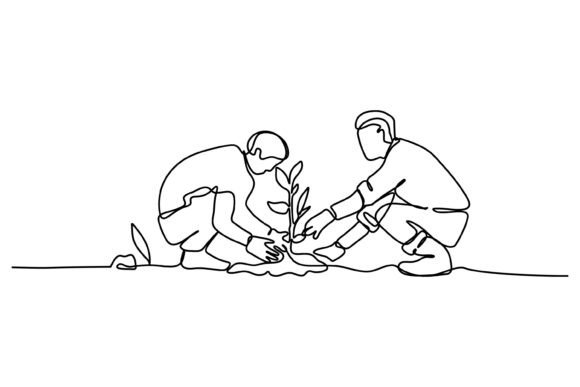
As someone who’s digitized, stitched, and sold hundreds of embroidery designs—from nursery decor to boutique apparel—I opened Continuous Line Design of Two Young expecting simplicity. What I found was something more intentional: a quiet, confident line drawing of two young people planting together. No shading, no outlines, no fill—just one unbroken path tracing hands, shovels, sprouts, and shared focus. It’s not flashy. But in embroidery, that’s often where the real utility begins.
A Design That Breathes on Fabric
This isn’t a dense satin-stitch portrait or a layered appliqué scene. It’s a single-line illustration—clean, rhythmic, and inherently scalable. The figures are stylized but recognizable: bent knees, upturned palms, small saplings rising between them. There’s warmth without sentimentality, activity without clutter. That matters immensely when translating into stitch.
I tested it as a centerpiece embroidery for organic cotton tote bags—a staple for eco-conscious boutiques and baby shower gifts. On 10-oz canvas, the line held beautifully at 3.2" wide using a 40-weight rayon thread and medium tear-away stabilizer. No puckering. No skipped stitches. The continuous nature meant minimal jump stitches, which kept the back tidy—a real win when stitching reversible items like pillow covers or tea towels.
Where It Shines (and Where It Asks for Care)
Continuous Line Design of Two Young thrives in projects where subtlety reads as sincerity: baby onesies (paired with soft pastel thread), linen aprons for garden-themed cafés, minimalist sweatshirt cuffs, or embroidered patches for school gardening clubs. Its light visual weight makes it ideal for personalized gifts—think “Emma & Leo Plant Their First Garden” stitched beside the design on a keepsake blanket.
It also works surprisingly well for commercial embroidery, especially when brand voice leans gentle, grounded, or nature-forward. I used it in a mockup for a small shop’s holiday collection: stitched in sage green on oatmeal-colored kitchen towels. Customers responded strongly—not because it’s bold, but because it feels *true*. That kind of resonance builds trust faster than any slogan.
But here’s where attention matters:
- Small hoop sizes (under 4"): The negative space between figures and plants shrinks quickly. At 2.5", the shovel handle starts to feel fragile. Test stitch before committing to caps or baby hats.
- Stretchy or thin fabrics: A single running stitch line won’t self-support on jersey or lightweight voile. Add light cut-away stabilizer—and consider doubling the stitch count manually if your machine allows fine-tuning.
- Dark or textured backgrounds: The JPG and SVG files are clean, but on charcoal terry cloth or burlap, the line can visually recede. Try a slightly thicker thread (like 30-weight) or a tone-on-tone approach—navy on navy, charcoal on charcoal—to preserve legibility without contrast overload.
- Curved surfaces: On baseball caps, the planting gesture stretches awkwardly across the front curve. Better suited to flat panels—back pockets, tote fronts, or pillow centers.
Real-World Fit Across Your Craft Business
If you’re an Etsy seller offering custom embroidered goods, Continuous Line Design of Two Young is quietly versatile. It pairs cleanly with hand-lettered names, coordinates with botanical motifs (think simple leaf clusters or seed packet silhouettes), and scales well for both digital previews and physical samples. I dropped it into a printable mockup for a client’s “Grow Together” wedding favor—stitched on muslin seed packets—and it read clearly at 1.8". That flexibility saves time when building listings.
For small shop owners developing seasonal collections, this design bridges age groups and occasions. Use it on toddler rompers (“Our Little Gardeners”) and adult aprons (“Tended With Love Since 2023”) with the same file—no redesign needed. That consistency strengthens brand recognition without sacrificing handmade charm.
And for digital product sellers: the EPS and SVG formats mean easy integration into Canva templates, Procreate brushes, or Illustrator-based pattern repeats. Just remember—this is a graphics asset first, an embroidery file second. If you plan to sell stitched versions (e.g., finished embroidered patches), verify licensing terms before listing. The description confirms you receive EPS, SVG, and JPG—but doesn’t specify commercial use rights. Always double-check.
Design Notes You’ll Actually Use
Before stitching your first Continuous Line Design of Two Young piece, do these five things:
- Test on scrap fabric matching your final project—especially if using textured weaves or blends.
- Check thread color contrast in natural light. A pale yellow line disappears on cream linen unless you boost saturation slightly in your embroidery software.
- Review stitch density. Single-line designs can run too fast or too sparse depending on machine settings. Aim for 8–10 stitches per mm for clarity without stiffness.
- Confirm hoop size compatibility. The design fits comfortably in a 5x7 hoop at standard scale—but if you’re resizing for tiny baby bibs or large wall hangings, adjust stabilizer type accordingly.
- Mock it in black and white first. This reveals subtle imbalances—like whether the two figures read as equally weighted or if one plant appears disproportionately dominant.
Final Thought: Simplicity With Substance
In a market flooded with ornate, over-digitized embroidery files, Continuous Line Design of Two Young stands out by doing less—and meaning more. It doesn’t shout. It invites. It fits naturally on products meant to be held, gifted, worn, and lived with. Whether you’re stitching for a client’s heartfelt baby announcement or building a cohesive line of garden-themed handmade products, this design earns its place—not as decoration, but as quiet intention made visible.
Just remember: even the simplest line carries weight once it’s stitched in thread. Choose your fabric, stabilizer, and context with care—and let the design do what it does best: connect.